Automotive · Physical Operations Intelligence

Where does observable showroom demand lose support while there is still time to respond?

In a controlled pilot, AnyVidi can turn supported camera views into anonymous spatial events for a reconstructed 3D operating map. Managers can review showroom demand, sustained vehicle-area dwell, unsupported waiting, role-level coverage, and journey continuation while the condition is still active.

Plan a Spatial Audit

First, we verify which camera views can reliably support each area and event.

Evidence boundaryTest-drive, appointment, lead, quotation, sale, revenue, work-order, and recorded service outcomes require an approved and implemented system-of-record integration.

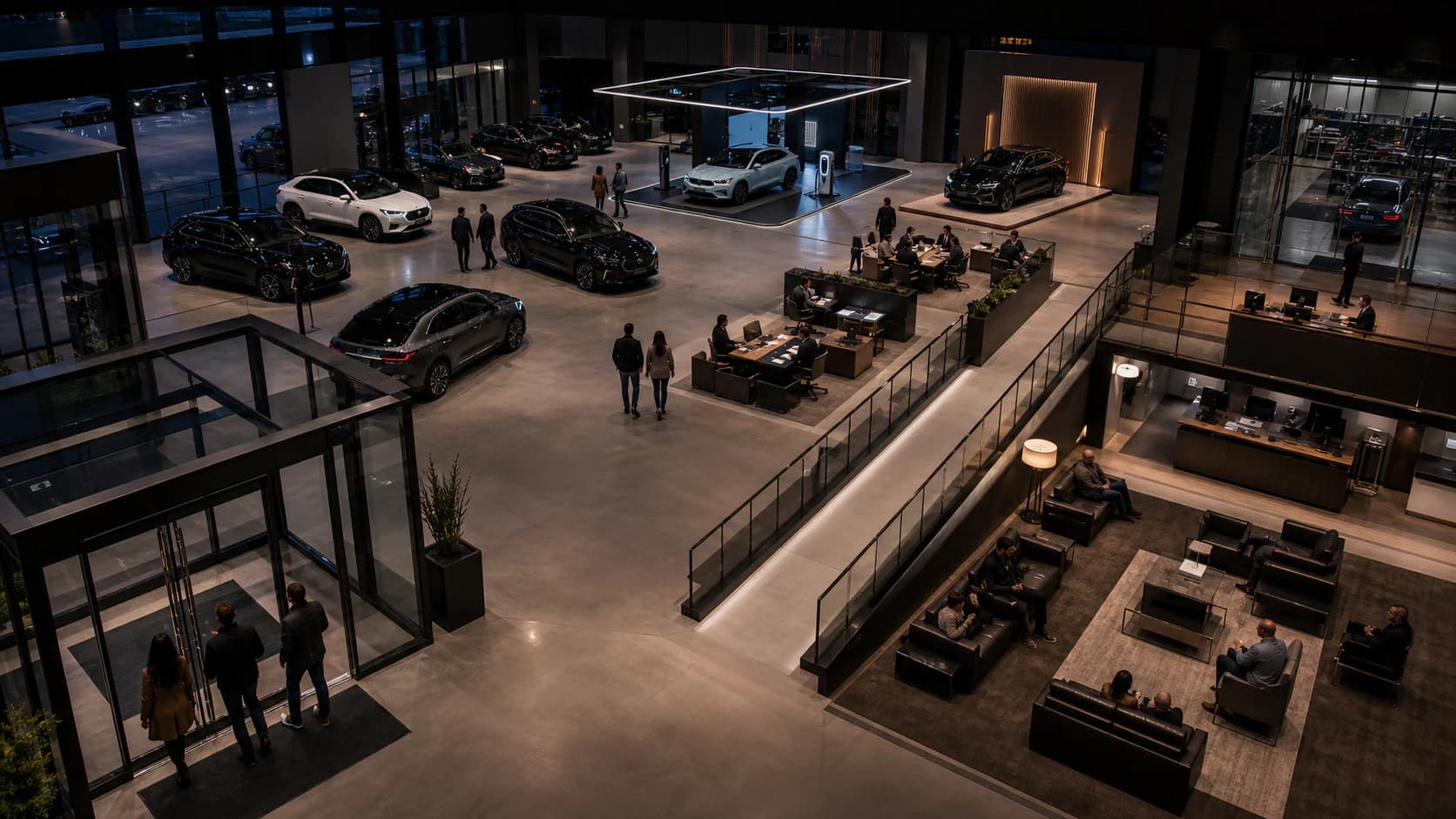
Illustrative automotive operating map with entrance, vehicle displays, EV area, consultation desks, service reception, and waiting lounge.
One physical showroomCompare the same question across the network. Each location keeps its own context.
Illustrative operating view. No customer or performance result is shown.
Camera-native showroom scope

Build the operating view from camera-verifiable showroom signals.

This is a representative scope, not a fixed metric ceiling. The useful KPI starts with the areas and operating question that matter to your team.

Traffic and demand

  • Entry, exit and pass-by
  • Footfall, occupancy and density
  • Group visits and first stop

Vehicle and display interaction

  • Vehicle and EV area dwell
  • Same visit return to a vehicle
  • Supported contact across 12 configured parts
  • Campaign or display continuation to a vehicle
  • Heatmap and layout or display comparison

Service and team

  • Team coverage by role
  • Greeting and advisor response
  • Queue, waiting and unassisted visit
  • Service reception pressure

Journey and comparison

  • Mapped movement and anonymous journeys
  • Journey continuation and physical drop-off
  • The same model across showrooms
  • Location, region and period comparison
Dashboard action signalsChain comparisonDashboardApproved integration boundaryConditional system-of-record context
Inside the showroom

Which physical showroom condition needs attention now?

Keep the mapped showroom fixed. Change the question to review observable demand, supported contact, waiting, role-level coverage, and physical journey continuation.

Showroom question
Comparison view
Entrance and first stop
Read the selected question inside one mapped showroom.

Where is observable showroom demand forming first?

Read anonymous group entry, pass-by to entry, and the first mapped area reached before a vehicle or desk is chosen.

What the camera can read
  • Entry and exit
  • Anonymous visitor groups
  • First stop by mapped area
Camera reads

Suitable views can read anonymous groups, footfall, vehicle area dwell, supported part contact, mapped journeys, waiting, service pressure, and team coverage by role.

Connected system confirms

Recorded outcomes can be compared only through an approved and implemented system-of-record integration.

Configured pilot condition
Entrance and receptionConfigured arrival windowAttention

Showroom arrivals are building while greeting coverage is not visible around the first stop.

Dashboard action signal

Review greeting coverage at the entrance while arrivals are still active.

Location-specific learning

Keep each location’s operating context distinct.

In a controlled pilot, supported camera views can be processed on the on-site Edge PC. Continuous raw video is not sent over the WAN. Configured anonymous operational metadata may support location-specific pattern review. Any recommendation remains manager-reviewed and is not applied automatically.

Learns local patterns

Keeps recurring area, journey, waiting, and coverage patterns specific to this location.

Presents a recommendation

Layout and operational recommendations go to manager review. Nothing is applied automatically.

Chain comparison

Locations are compared under the same operating question while each location model remains separate.